
#2: It takes us a month to make a simple sandwich.
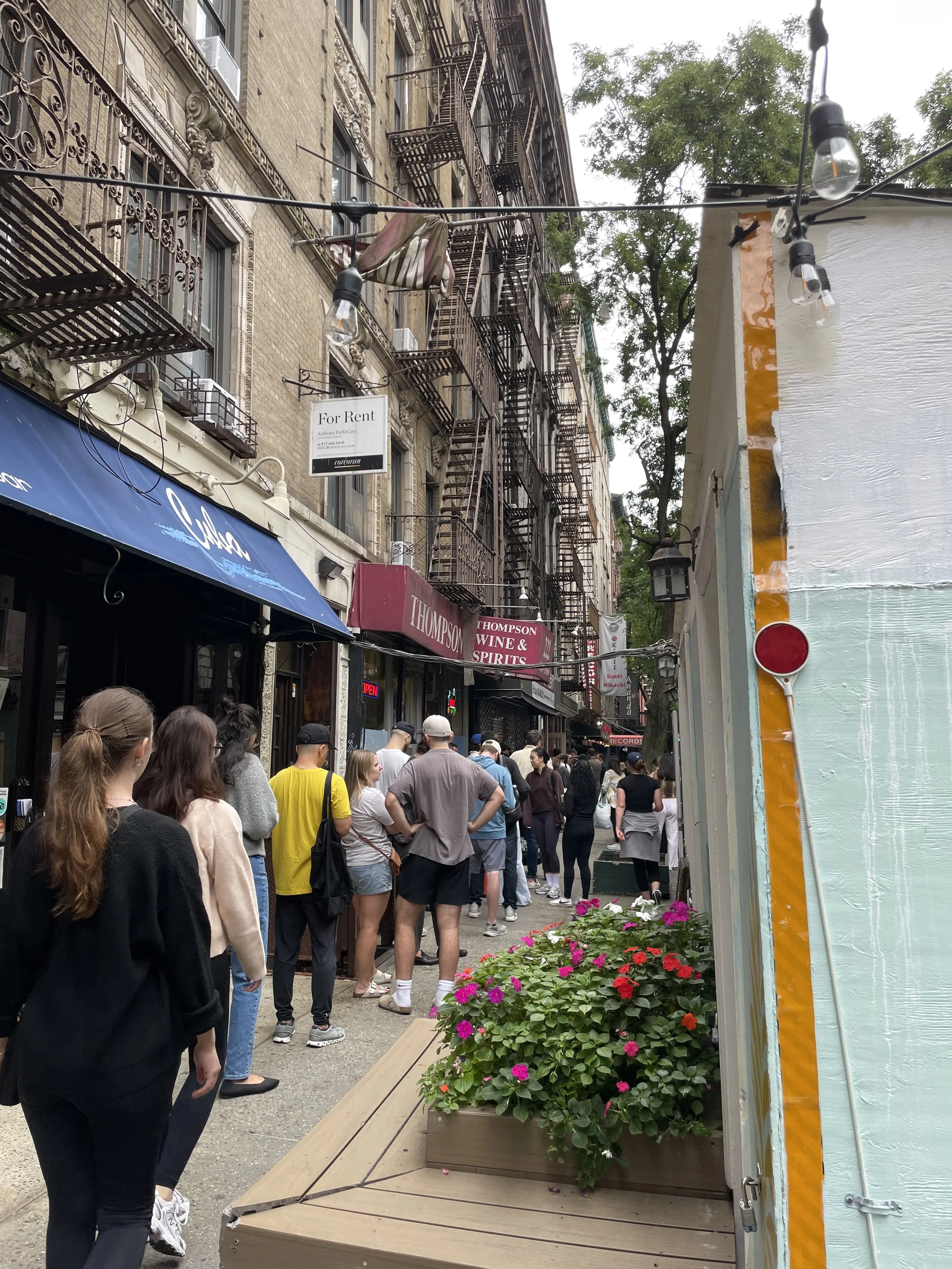
When we first opened Brown Bag in Greenwich Village, there was a Tuesday afternoon when we had a line around the block.
Usually, a line around the block is a pretty good sign for a new restaurant. Ours was also a sign that we had absolutely no idea what we were doing.
At the time, we were making basically everything à la minute. If you ordered an Italian, we'd take out the whole prosciutto leg and slice it. Take out the soppressata and slice it. Take out the log of provolone, and slice that. Then we'd slap everything down on butcher paper, chop everything, dress it, add the vegetables, toast the bread and build the sandwich.
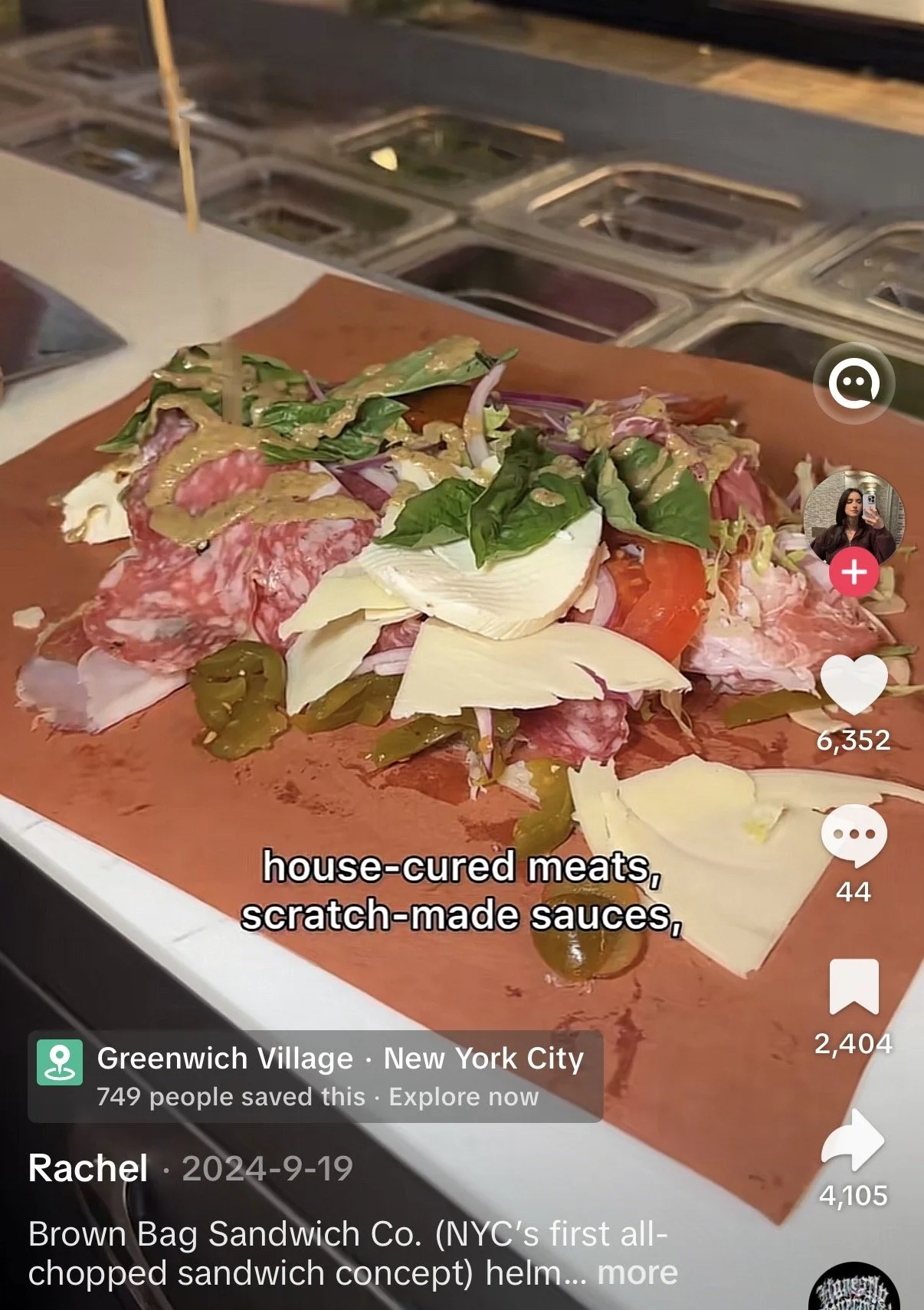
It would take us on average, eight minutes to make a sandwich, when we opened Greenwich Village.
One of my mentors, who has spent his career in hospitality, came in during one of these lunch rushes. I remember finally getting his order together, fumbling with the bag trying to get his sandwich into it, and eventually handing it to him with this little smirk like, alright, here you go! It was a mess.
He looked at what was happening behind me and basically said: nah. You guys can't be doing it like this. And I think that moment explains a lot about how we think about the menu at Brown Bag now.
The sandwiches are supposed to be simple.
When we created the original Brown Bag menu, the goal was never to reinvent sandwiches. It was actually kind of the opposite.
We wanted to take New York deli classics that people already understand and love - the chopped cheese, Italian, turkey club, tuna melt, chicken Caesar - put them all under one roof, and make our version of them really, really well.
There's a nostalgia to it. Tony has described the idea as picking your favorite sandwiches from around New York and putting your personal top ten in one shop. And for a chef who spent most of his career in fine dining, including Eleven Madison Park, that actually requires some restraint.
We generally try not to make sandwiches with a million ingredients. Three or four really good things that each have a reason to be there is usually more interesting to us than piling things onto a sandwich just to make it seem different.
The “fine dining” part isn't supposed to be obvious when you eat it. It's in the process underneath it.
It's why our chicken gets marinated for 12–24 hours. It's why we make our own Caesar dressing and spicy tuna sauce. It's why we weigh fillings. It's why we have sandwich build sheets in English and Spanish. It's why our bread gets toasted in clarified butter. It's why chopping a sandwich isn't just a gimmick - the entire point is that when you take a bite, you get everything that's supposed to be in the sandwich instead of pulling an entire slice of prosciutto out with your teeth.
But it also turns out that making a great sandwich is only half the problem. You have to figure out how to make it great 250 times during a 90-minute lunch rush.
After that Tuesday, we started looking at every step of the process and asking a pretty simple question: Does doing EVERYTHING à la minute actually make the sandwich better? Slicing the prosciutto, or hand-carving the whole chicken, after you ordered it didn't.
So now we slice our prosciutto, soppressata and provolone fresh every day. We pre-dice exactly what we need for service. When you order it, we're not starting from zero anymore.
There are some things, though, that we're not willing to make faster. Your bread is still getting toasted à la minute. We're not budging on that one.
Over time, we went from taking eight minutes to get a sandwich out to being able to make one in around 90 seconds.
That's probably one of the biggest things I've learned about restaurants: more work does not always mean a better product.
And consistency matters just as much as the best version of something you've ever made. Making one amazing sandwich is relatively easy. Making sure someone gets that same sandwich on a quiet Monday at 3 p.m. and during a completely slammed Thursday lunch is the hard part.
That's why so much of what happens behind the scenes at Brown Bag is weighing, prepping, labeling, training and repeating. The goal is to create a product a customer can trust will be the same over and over again.
Which brings me to how a sandwich actually gets onto our menu today.
You see a new sandwich. We've been talking about it for a month.
We try to launch seasonal specials throughout the year, and we generally start working on one four to six weeks before you ever see it.
The first couple weeks are R&D. What do we actually want to make? Does it feel like Brown Bag? Is it familiar enough to make sense alongside a chopped cheese and turkey club? Is there a reason for it to exist? And, most importantly: is it actually good?
Then we get into sourcing. Can we get the ingredients we want at both stores? Can we get enough of them? Is the quality consistent? What does the sandwich cost us? What happens when we need to make 50 of them instead of one?
Then comes training. We start with one-on-one knowledge transfer to our kitchen managers. They learn the build, the weights, the process and what we're looking for in the final product. Then they train their teams. And everybody has to learn the sandwich. That includes the cashier. If someone walks in and asks what's on the new sandwich, the person taking the order should know what it is, how it tastes and what makes it different. Menu training isn't just for the person standing over the griddle.
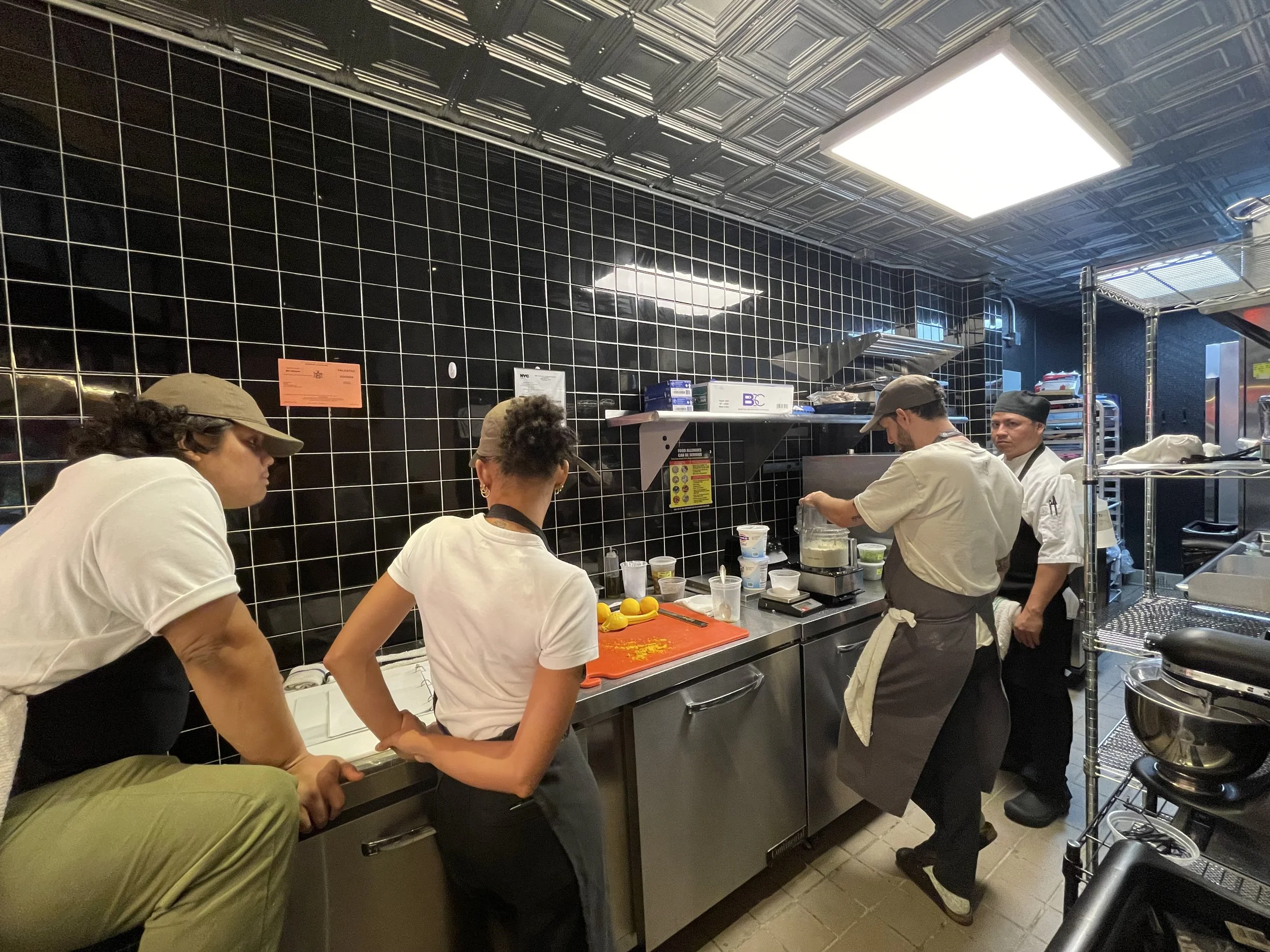
So by the time you see us post a photo on Instagram saying “NEW SANDWICH,” we've usually been talking about the thing for a month.
Sometimes the right new sandwich is actually an old one.
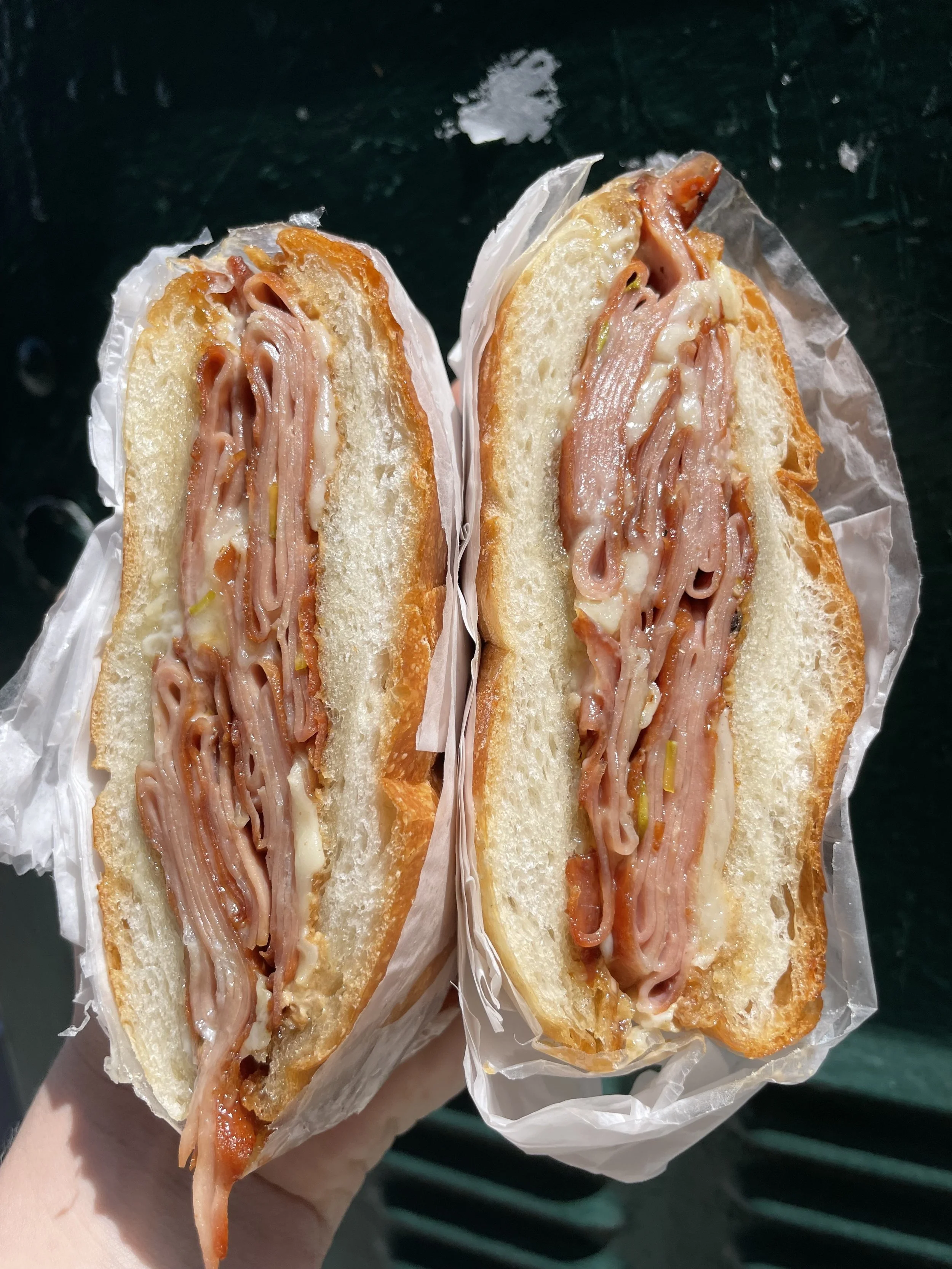
Our most recent example is the Anthony Bourdain. It was actually one of the sandwiches on the menu when we first opened Brown Bag: pistachio mortadella, sharp provolone, mayo and Dijon on a Kaiser roll. Very simple. Very good.
We eventually took it off the menu, mainly because we’d all leave the restaurant smelling like provolone cheese. But people kept asking us to bring it back. So this fall, we did.
Part of the decision was food. Mortadella and melted sharp provolone on a Kaiser roll just feels like a fall sandwich. Part of it was you guys asking for it. And part of it was timing. With the new Bourdain movie, Tony, coming out, there was suddenly a culturally relevant moment to bring the sandwich back. That's something we've started thinking about more intentionally too.
A menu doesn't exist in a vacuum. Seasonality matters. What people are talking about matters. What's happening in New York matters. If there's a moment when a sandwich makes more sense, we'd rather launch it then than pick a random Tuesday because our marketing calendar says we need something new.
And then, after all of that work, we launch it. And you guys decide whether we were right.
We have a spreadsheet.
This is probably the least romantic part of menu development. Every week, we look at what's actually selling at both stores. And the data can be humbling.
The Chicken Caesar is basically a monster. Since we started consistently tracking menu mix this year, it has been our top-selling sandwich basically every week at both shops. There are weeks when it has represented more than a third of sandwich sales at a store.
Then there are sandwiches we really like that consistently represent 1 or 2 percent. Our eggplant is a good example. It has spent a lot of weeks near the bottom of the menu mix. That doesn't mean we automatically kill it.
Maybe it's important to have a vegetarian option. Maybe the people who order it absolutely love it. Maybe the recipe needs work. Maybe we're doing a terrible job marketing it. Maybe it has a place on the menu even if it will never outsell the Chicken Caesar. But the number forces us to ask the question.
And the Bourdain has been interesting to watch in real time.
Its first tracked week after coming back, it represented about 2% of sandwich sales at each shop.
The following week, it was 6% at both, then 10% the week after. That's a pretty meaningful jump in fourteen days.
So yes, we have opinions about the menu. But you guys ultimately get a vote too.
And apparently you're willing to vote with more than your order.
This has become another part of menu development that I'm increasingly obsessed with. In my last Note, I ended by asking you guys to write back and tell me what you like, what you don't, what we should make, what we could be doing better, or literally just say hi.
You did.
One person told me our chopped cheese and Chicken Caesar are two of the best versions she's had in New York. She also told me our tuna melt “just did not hit.” Fair.
Someone else, who is Peruvian, wrote to tell us that she was excited when she saw ají amarillo in our tuna but thought something tasted off - and suggested we experiment with rocoto or ají panca instead. That got sent to the kitchen too.
Someone else told us she puts Miss Vickie's jalapeño chips inside her chopped cheese for crunch and literally dreams about the sandwich. Also useful information.
And then there are our employees. The people making these sandwiches hundreds of times a week notice things we don't. They know which build is annoying during service, what ingredient isn't holding the way it should, what customers keep asking for, what comes back, and what people at the register hear over and over again.
So menu decisions have become this combination of:
What do we think tastes best?
What are customers telling us?
What are employees telling us?
What does the sales data say?
Can we source it consistently?
Can we make it at scale?
Can we train it?
Does it make sense for the season?
Does it make sense for Brown Bag?
And can we get it into your hands during lunch without making you wait eight minutes while somebody slices prosciutto?
I think that's the funny part about sandwiches.
They're supposed to be simple. That's actually what we like about them.
We don't want Brown Bag to be a place where you need someone to explain 14 ingredients to you before you order lunch. We want you to recognize the sandwich.
The complicated part should happen before it gets to you.
We can spend weeks arguing about a sandwich. Then another week teaching 25 people how to make and sell it. We weigh it. Cost it. Source it. Put it on the menu. Track it in a spreadsheet. Read what you guys say about it. Listen to the people making it every day.
Sometimes we change it. Sometimes we bring one back. Sometimes we take one away.
All so that when you walk into Brown Bag at 12:30 on a Tuesday, you don't have to think about any of that. You just get a really good sandwich. Ideally in about 90 seconds.
-The Brown Bag Team
P.S. If there’s something you want to know about Brown Bag, something you think we should do better, or something you just want to tell us, send it our way - gilli@brownbagny.com. I actually read them.